Introduction
Hello everyone. For my first post, I thought I would write briefly about a presentation I gave at the College of the Canyons Star Party regarding the evidence of water on Europa.
Europa is one of the four moons of Jupiter discovered by Galileo Galilei (and Simon Marius) in 1610. Due to its smooth surface, scientists long suspected there to be a subsurface ocean and hopefully, life in the form of single-celled organisms and other bacteria-like creatures in that ocean.
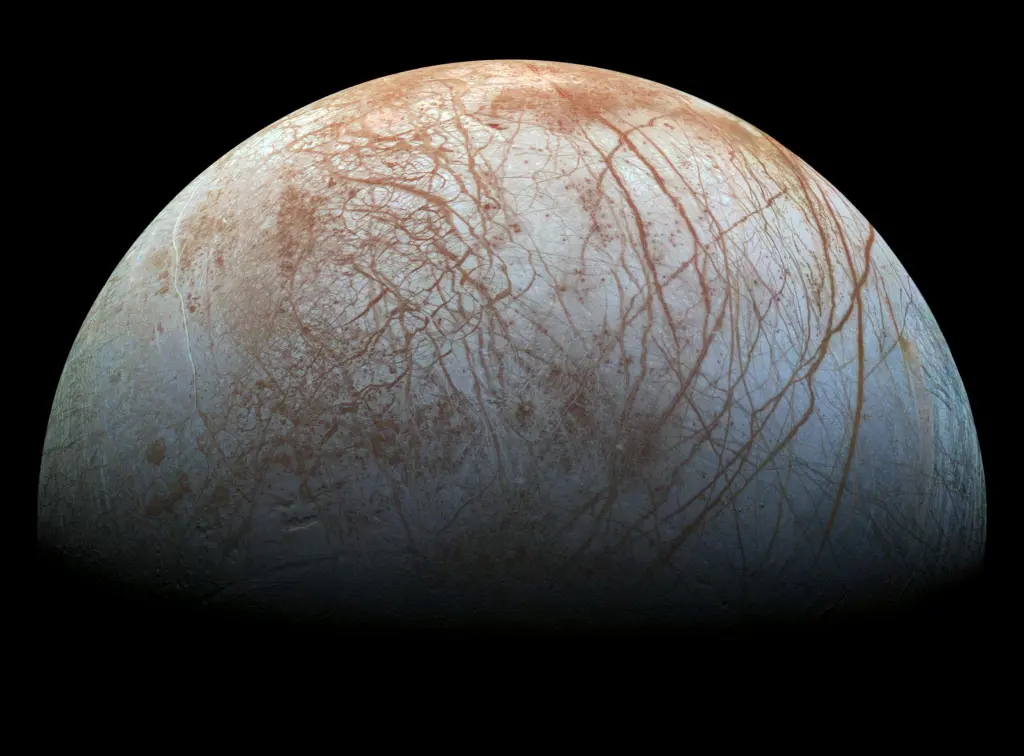
An image of Europa taken by the Juno Spacecraft in 2022.
Spectroscopy
The Hubble Space Telescope discovered evidence of water vapor using a technique called ultraviolet spectroscopy. This method studies how light interacts with matter—especially in the ultraviolet (UV) range, which is invisible to the human eye.

An image of the Hubble Space Telescope
In space, water molecules can break apart into hydrogen and oxygen atoms when exposed to energy like sunlight. This process, called photodissociation, happens often in places like icy moon plumes or thin atmospheres.
When hydrogen and oxygen atoms form, they absorb and emit light at very specific UV wavelengths. These are like atomic fingerprints, and Hubble can detect them. By analyzing the light from distant objects, scientists found spectral lines that match those of hydrogen and oxygen, which strongly suggests that water vapor had recently broken apart nearby.
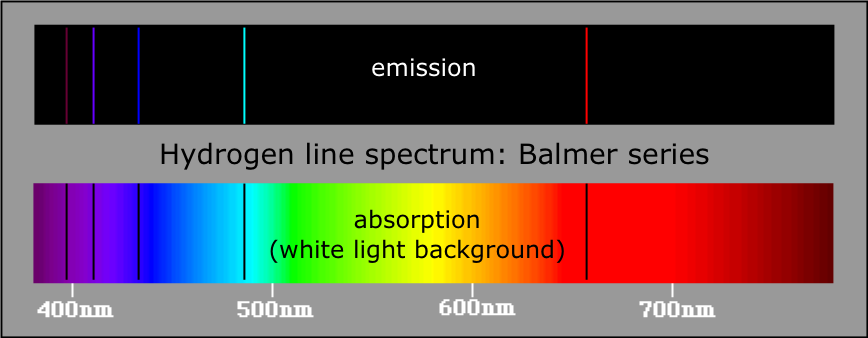
The spectral lines of Hydrogen
Magnetic Field Measurements
When NASA’s Galileo spacecraft flew past Europa, its magnetometer detected an unexpected disturbance in Jupiter’s magnetic field near the moon. Under normal circumstances, Jupiter’s strong magnetic field should pass through a non-conductive body like rock or ice without much interference. However, the observed anomalies indicated that something within Europa was interacting with Jupiter’s field.
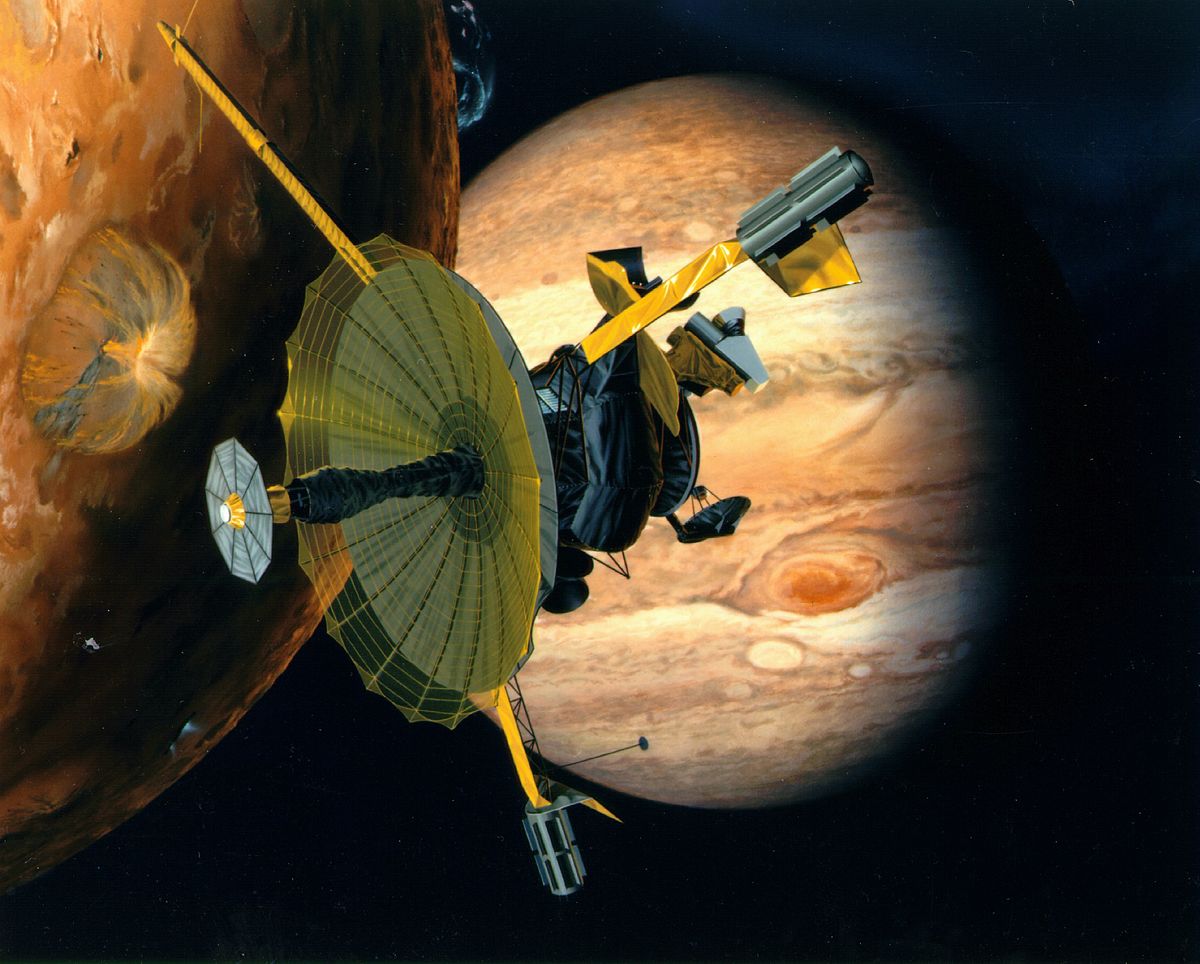
An image of the Galileo Spacecraft
Using Maxwell’s equations—the fundamental laws governing electromagnetism—scientists modeled how a conductive material could induce its own magnetic field in response to Jupiter’s. The best explanation was the presence of a subsurface, electrically conductive layer. Since salty water is a good conductor of electricity, this led to the strong hypothesis that Europa has a global ocean of liquid, salt-rich water beneath its icy shell.
Surface Geology and Ice Movement
High-resolution images from Galileo revealed a surface crisscrossed with long, intersecting cracks, ridges, and disrupted terrain that looks like floating icebergs. These features don’t resemble impact craters or typical tectonic processes. Instead, scientists applied physical modeling—specifically fracture mechanics, ice dynamics, and heat transfer equations—to understand these structures.

A closeup image of Europa's surface showing the cracks and ridges mentioned
Their models showed that tidal flexing from Jupiter’s immense gravitational pull causes Europa’s interior to stretch and compress rhythmically. This mechanical stress generates frictional heating, particularly at the boundary between the icy shell and the underlying layer, which helps to maintain a liquid ocean. The shifting and cracking of the ice are consistent with behavior expected above a fluid or slushy layer, similar to how Earth’s polar ice sheets deform over oceans.
Conclusion
Thanks to a combination of tools—from magnetic field measurements to surface imaging and spectroscopic observations—scientists have gathered compelling evidence that Europa harbors a subsurface ocean beneath its icy crust. The Galileo spacecraft’s detection of a magnetic field disturbance pointed to a conductive liquid layer, likely salty water. Geological patterns observed on the surface support this, with models showing that tidal heating from Jupiter’s gravity could keep this ocean in a liquid state.
These discoveries make Europa one of the most promising places in our solar system to search for extraterrestrial life. As future missions like NASA’s Europa Clipper prepare to explore this icy world up close, each piece of evidence builds a stronger case that beneath Europa’s frozen exterior lies a dynamic, potentially habitable ocean world.
Sources and Further Reading
Below are some sources I used throughout this short writeup as well as some interesting videos/articles I came across.
We Might Find Alien Life In 2114 Days by Veritasium
Europa by NASA
Why Europa by NASA